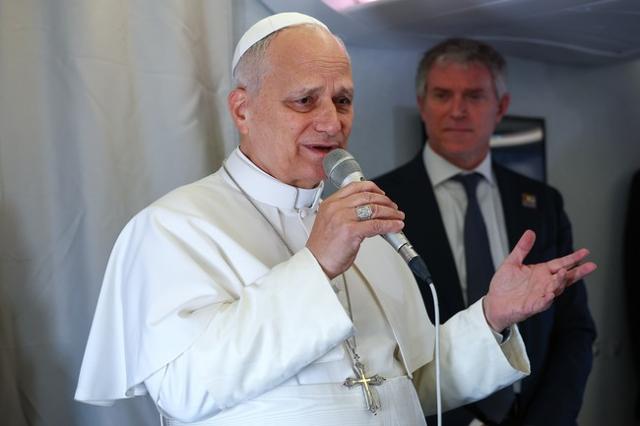
Pope Leo Needs Trump to Tame AI
The pope warns against power accumulating in private hands:
A few companies, led by a handful of executives and board members, control AI development.
The hard question Leo's first encyclical, "Magnifica Humanitas," tries to answer is how to make AI accountable to public authority and the common good, not just the interests of its creators.
This is where Leo runs into trouble — his view of politics is one-sided and decades out of touch.
The encyclical is written in the language of 20th-century liberalism, with the United Nations and international bodies playing an outsize role.
"International organizations, particularly the United Nations, are essential instruments for promoting a civilization of love," he writes, in the context of "negotiating shared regulations on the use of digital technologies, in order to protect civilians and the most vulnerable from 'invisible' yet real forms of violence."
Leo compares AI to the Tower of Babel, yet that image applies at least as well to the U.N.
Citing the teachings of Saint John Paul II and Pius XII, Leo affirms, "the Church values democracy insofar as it guarantees the effective participation of citizens, enables them to elect and peacefully replace their leaders and prevents power from being monopolized by small elite groups motivated by particular or ideological interests."